

Puzzles have been an important part of human learning and entertainment for centuries. They challenge the mind, strengthen logical thinking, and encourage problem solving through structured mental effort. From traditional wooden puzzles to modern digital brain challenges, puzzles remain widely used by children, students, professionals, and older adults alike.
Today, puzzles exist in many formats including printed books, board games, educational tools, and mobile applications. Their continued popularity demonstrates their value not only as recreational activities but also as powerful learning tools that support intellectual development and mental health.
This article explains what puzzles are, their types, historical background, benefits, and how they contribute to cognitive growth across different age groups.
What Is a Puzzle
A puzzle is a problem or game designed to test a person’s knowledge, logic, pattern recognition, or problem solving ability. Solving a puzzle usually requires observation, reasoning, patience, and creativity.
Puzzles can be played individually or in groups depending on their structure and purpose.
Common characteristics of puzzles include
- logical thinking requirements
- structured problem solving steps
- pattern recognition challenges
- memory involvement
- gradual difficulty progression
Because puzzles combine learning with entertainment, they are widely used in educational environments and personal development activities.
History of Puzzles
Puzzles have existed for thousands of years in various forms across civilizations. Ancient societies used riddles and logic challenges to test intelligence and communication skills.
One of the earliest known puzzles was the tangram, a geometric shape puzzle developed in ancient China. Later, mechanical puzzles appeared in Europe during the eighteenth century when map-based wooden puzzles were created for educational purposes.
Over time, puzzles evolved into many modern formats including
- crossword puzzles
- number logic puzzles
- mechanical cube puzzles
- digital puzzle applications
These developments helped puzzles become a universal form of intellectual recreation.
Types of Puzzles
Puzzles exist in many different forms, each designed to strengthen specific mental abilities.
Jigsaw Puzzles
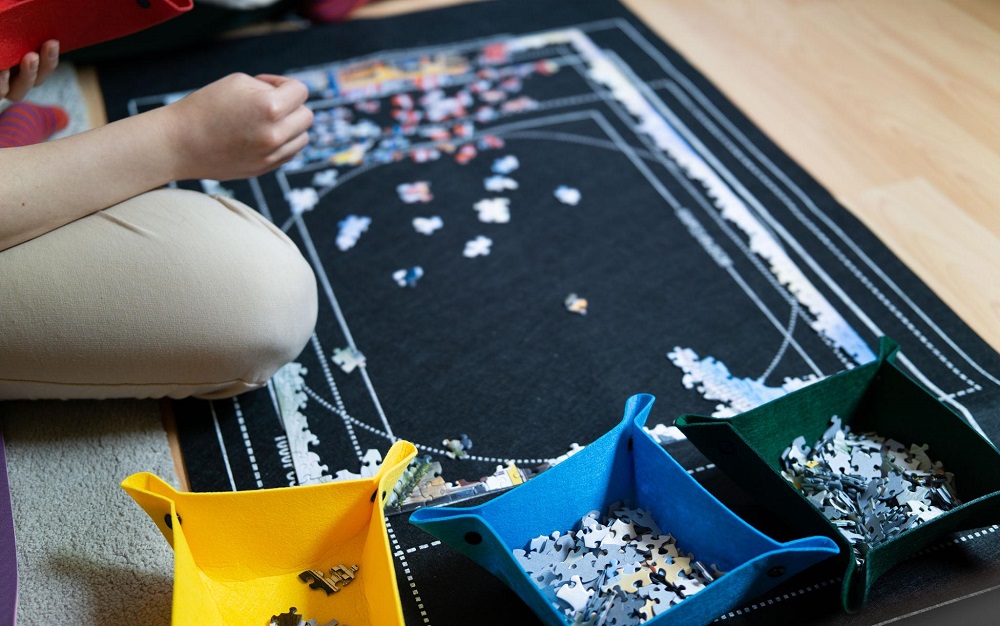
Jigsaw puzzles involve assembling pieces to form a complete image. They require attention to detail and spatial awareness.
Important features include
- shape recognition
- color matching
- visual memory improvement
- patience development
Jigsaw puzzles are suitable for both children and adults.
Crossword Puzzles
Crossword puzzles challenge vocabulary knowledge and language skills.
Players must
- identify correct word meanings
- recognize letter patterns
- interpret clues carefully
- apply spelling accuracy
These puzzles support language development and communication skills.
Sudoku Puzzles
Sudoku is a number-based logic puzzle that requires filling grids according to specific rules.
Sudoku improves
- concentration ability
- numerical reasoning
- logical sequencing skills
- pattern identification
It is widely used as a daily mental exercise activity.
Mechanical Puzzles
Mechanical puzzles include objects that require manipulation to achieve a solution.
Examples include
- cube rotation puzzles
- sliding tile puzzles
- interlocking wooden puzzles
These puzzles improve hand coordination and spatial reasoning.
Logic Puzzles
Logic puzzles involve solving structured reasoning challenges based on given clues.
Players develop
- analytical thinking
- deduction skills
- structured reasoning strategies
These puzzles are commonly used in academic training environments.
Digital Puzzle Games
Digital puzzles are available through computers and mobile devices.
Common advantages include
- adjustable difficulty levels
- interactive gameplay features
- instant feedback systems
- wide accessibility across platforms
Digital puzzles make brain training convenient and widely available.
Benefits of Solving Puzzles
Puzzles provide a wide range of mental and emotional benefits that support long term cognitive health.
Improved Memory Skills
Solving puzzles requires recalling patterns, shapes, words, and strategies. Regular puzzle activity strengthens both short term and long term memory.
Memory improvement benefits include
- better information retention
- improved recall speed
- stronger mental organization
These improvements support academic and professional performance.
Stronger Problem Solving Ability
Puzzles train the brain to analyze situations carefully before making decisions.
Problem solving improvements include
- recognizing patterns quickly
- evaluating multiple solutions
- selecting effective strategies
These skills are valuable in everyday life situations.
Increased Concentration Levels
Completing puzzles requires focused attention over sustained periods.
Regular practice helps develop
- mental discipline
- longer attention span
- improved task completion ability
This supports productivity across different activities.
Stress Reduction Benefits
Puzzle solving encourages calm and structured thinking. Many people experience relaxation while working through challenging problems step by step.
This helps
- reduce anxiety levels
- improve emotional balance
- support mental clarity
These effects make puzzles useful for maintaining psychological well being.
Educational Importance of Puzzles
Puzzles play an important role in classroom learning environments. Teachers often use puzzle based activities to improve student engagement and understanding.
Educational advantages include
- strengthening reasoning ability
- improving vocabulary development
- encouraging independent thinking
- supporting mathematical learning skills
Puzzle based learning increases participation and helps students understand concepts more effectively.
Role of Puzzles in Child Development
Children benefit significantly from early exposure to puzzles. These activities support both physical coordination and intellectual growth.
Developmental benefits include
- improved hand eye coordination
- stronger shape recognition ability
- better logical reasoning skills
- enhanced patience and persistence
Puzzle activities also help children develop confidence through achievement.
Role of Puzzles in Adult Brain Health
Puzzles remain valuable throughout adulthood because they help maintain mental sharpness and cognitive flexibility.
Regular puzzle solving supports
- memory retention
- decision making ability
- attention control
- mental endurance
Adults who regularly engage in puzzle activities often maintain stronger cognitive performance over time.
Social Benefits of Puzzle Activities
Although many puzzles are individual activities, group puzzle solving encourages cooperation and communication.
Social advantages include
- teamwork development
- shared problem solving experiences
- improved communication skills
- collaborative learning opportunities
Group puzzle activities are commonly used in classrooms and training workshops.
Puzzles in Digital Learning Environments
Technology has transformed puzzle accessibility through mobile applications and online learning platforms.
Digital puzzle tools offer
- personalized difficulty adjustment
- progress tracking systems
- interactive visual feedback
- wide availability across devices
These features allow learners to practice regularly without needing physical puzzle materials.
How to Choose the Right Puzzle
Selecting an appropriate puzzle depends on age, skill level, and learning objectives.
Important selection factors include
Difficulty Level
Choosing puzzles that match ability levels helps maintain motivation and interest.
Beginners should start with simple puzzles before progressing to advanced challenges.
Learning Purpose
Different puzzles support different learning goals.
Examples include
- vocabulary improvement puzzles
- number reasoning puzzles
- visual recognition puzzles
- strategic logic puzzles
Selecting the right category improves learning effectiveness.
Time Availability
Short puzzles suit busy schedules, while complex puzzles support extended concentration sessions.
Matching puzzle length with available time improves consistency.
Tips for Improving Puzzle Solving Skills
Developing puzzle solving ability requires regular practice and structured thinking.
Helpful strategies include
- observing details carefully before beginning
- identifying patterns early
- dividing complex problems into smaller sections
- practicing regularly to improve speed
Consistent effort improves puzzle solving confidence and accuracy.
Future Role of Puzzles in Learning and Entertainment
Puzzles continue evolving alongside digital technology. Interactive educational systems increasingly use puzzle based methods to support learning outcomes.
Future developments may include
- adaptive learning puzzle platforms
- artificial intelligence guided puzzle training
- collaborative online puzzle environments
- immersive educational puzzle simulations
These innovations will expand puzzle accessibility and effectiveness across different age groups.
Frequently Asked Questions About Puzzles
Are puzzles helpful for improving creativity
Yes. Many puzzles encourage flexible thinking and alternative solution strategies that support creative problem solving.
How often should puzzles be practiced for mental benefits
Regular short sessions several times per week are generally effective for maintaining cognitive engagement.
Do puzzles improve mathematical ability
Number based puzzles strengthen numerical reasoning and logical sequencing skills that support mathematical learning.
Can puzzles be used in professional training programs
Yes. Many organizations use logic puzzles to improve analytical thinking and decision making skills.
Are digital puzzles as effective as physical puzzles
Both formats provide cognitive benefits, although physical puzzles also support hand coordination development.
What types of puzzles are suitable for beginners
Simple jigsaw puzzles, basic word searches, and entry level number puzzles are appropriate starting options.
Do puzzles help improve attention span in children
Yes. Regular puzzle practice encourages children to focus longer and complete structured tasks more effectively.